Visa Introduces AI Financial Assistant for Banking Apps
Banks can offer spending insights, natural-language answers and card controls under their own brands.
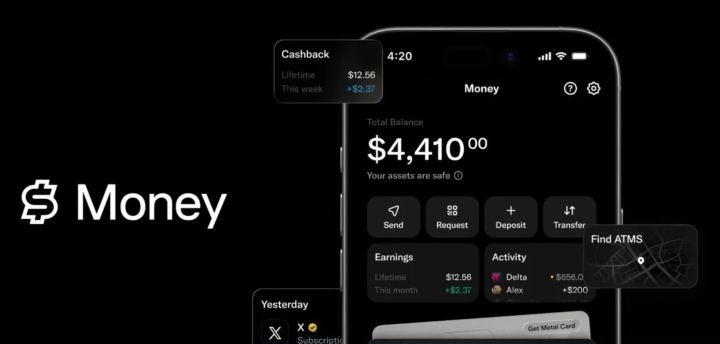
SAN FRANCISCO, Calif. - Visa has introduced an AI financial assistant that banks can add to their mobile applications under their own brands, representing a significant expansion for the payment giant into consumer-facing software. The service is designed to answer complex questions about an account, explain nuanced spending patterns, and help customers take direct actions such as locking a card or setting a specific alert according to their preferences. By offering these capabilities through its digital platform, the company aims to bridge the gap between back-end transaction processing and the front-end user experience that modern banking customers increasingly expect.
The assistant utilizes a customer's specific transaction history to provide monthly insights and respond to natural-language questions, moving beyond the static lists of charges found in traditional digital bank statements. Visa said banks can deploy the capability without the high overhead of building a separate, proprietary AI system from the ground up. Instead, the company supplies the underlying models, transaction intelligence, and application components through its existing digital infrastructure, reflecting a broader trend in the financial services sector toward 'as-a-service' delivery models for highly technical features.
Visa plans to begin a United States pilot of the technology in August, followed by a wider global rollout as the system matures. The company said its approach is informed by the hundreds of billions of transactions processed across its network annually, providing a massive dataset with which to refine the accuracy of its financial intelligence. However, the company maintains a clear boundary regarding data governance, noting that each individual bank remains responsible for the customer relationship and the specific data it makes available to the AI system to ensure compliance with local regulations.
The launch turns Visa's decades of payment data and fraud expertise into a tangible consumer-facing software product. Traditionally, Visa has operated primarily as the invisible plumbing of the global economy, facilitating the movement of money between merchants, banks, and consumers. This new initiative places the company directly alongside major banks and financial-technology firms that have already been racing to offer their own AI assistants, such as Bank of America’s Erica or various startups in the fintech space that use generative tools to attract younger, tech-savvy users.
Distribution through existing banking apps could give the service immediate and massive reach without asking customers to adopt another financial application or switch their primary banking relationships. In a saturated market where 'app fatigue' is a significant barrier to entry for new services, leveraging the established trust and real estate of a bank’s mobile home screen is a strategic move for Visa. This business-to-business-to-consumer approach allows Visa to scale its AI tools across thousands of financial institutions rather than competing for individual consumer downloads.
The move comes at a time when the payments industry is undergoing a radical shift toward data monetization and integrated services. As transaction fees face continued pressure from regulators and competition, payment networks are looking to higher-margin software services to diversify their revenue streams. By providing a white-label AI assistant, Visa is essentially offering a turnkey solution for regional and mid-sized banks that may not have the billion-dollar research and development budgets required to compete with the technology suites of global financial conglomerates.
Industry analysts have noted that financial guidance requires a significantly higher standard of accuracy and safety than a general-purpose chatbot. In an industry defined by trust and regulatory scrutiny, errors in financial reporting or unauthorized account actions carry severe consequences. The assistant must be engineered to strictly distinguish facts from suggestions, protect sensitive account information, and avoid taking any action that the customer did not explicitly intend, such as a card cancellation based on a misinterpreted query.
To mitigate these risks, the current implementation emphasizes that banks should test the system rigorously for errors and provide clear routes to human support before expanding it to more sensitive decisions. The integration of human-in-the-loop oversight is a critical component of the deployment strategy, serving as a safeguard against the 'hallucinations' or inaccuracies often associated with large language models. Ensuring that a customer can instantly speak to a human representative remains a pillar of the service model to prevent consumer frustration.
The broader financial context for this launch includes the rapid rise of generative artificial intelligence following the public release of tools like ChatGPT. While the financial sector has long used machine learning for fraud detection and credit scoring, the move toward natural-language interfaces represents a new frontier. Visa’s ability to parse transaction data into meaningful narratives—such as identifying a rise in subscription costs or predicting upcoming bills—is intended to make the banking experience more proactive rather than reactive.
Observers will be watching the August pilot closely to see how effectively the AI handles the variety of merchant names and transaction codes that often confuse consumers on their bank statements. The ability to translate a cryptic merchant ID into a recognizable brand name is one of the primary value propositions for an AI assistant. If Visa can successfully refine this data at scale, it could significantly reduce the volume of customer service calls that banks receive regarding unrecognized transactions, which is a major operational cost for the industry.
Beyond simple inquiries, the potential for card controls within the chat interface represents a shift toward more interactive banking. Instead of navigating through multiple layers of a mobile app's settings menu, a user being able to simply type 'lock my card' or 'notify me when I spend over fifty dollars at a restaurant' simplifies the user journey. This efficiency is a core part of Visa's strategy to increase the stickiness of its partner banks' applications and ensure that Visa-branded cards remain the preferred method of payment.
As the pilot progresses, the market will also likely focus on how Visa balances the power of its network-wide data with the privacy requirements of individual banks and their customers. The company’s emphasis on bank-led data governance suggests a cautious approach to data sharing, which is necessary to navigate the complex landscape of global data protection laws like GDPR in Europe or various state-level privacy acts in the United States.
Ultimately, the success of the Visa AI Financial Assistant will depend on its adoption rate among smaller and mid-sized financial institutions that lack the internal resources to build similar tools. If Visa can prove that its AI increases user engagement and reduces fraud-related inquiries during the U.S. pilot, it could set a new standard for what constitutes a baseline banking application feature. The global rollout will test the system's ability to handle multiple languages, currencies, and local spending habits across diverse economic regions.
Looking forward, this launch marks just the beginning of what many expect to be a prolonged cycle of AI integration in the payments space. As Visa continues to iterate on its models, the assistant could eventually offer more predictive services, such as suggesting ways to optimize rewards or identifying potential savings based on historical patterns. For now, the company remains focused on the fundamental task of making account management more intuitive and accessible for the millions of cardholders who interact with their banking apps daily.
Sources
Written by
The Company Wire
Inside the companies building what’s next. Reporting on startups, technology, funding and the people shaping them.