AI Equity Slump and Hyperscaler Debt Break Bond Market's Oil Correlation
A divergence between rising crude oil and falling Treasury yields shows fixed-income markets treating AI capex retrenchment as a primary disinflationary risk.
Archive
A divergence between rising crude oil and falling Treasury yields shows fixed-income markets treating AI capex retrenchment as a primary disinflationary risk.
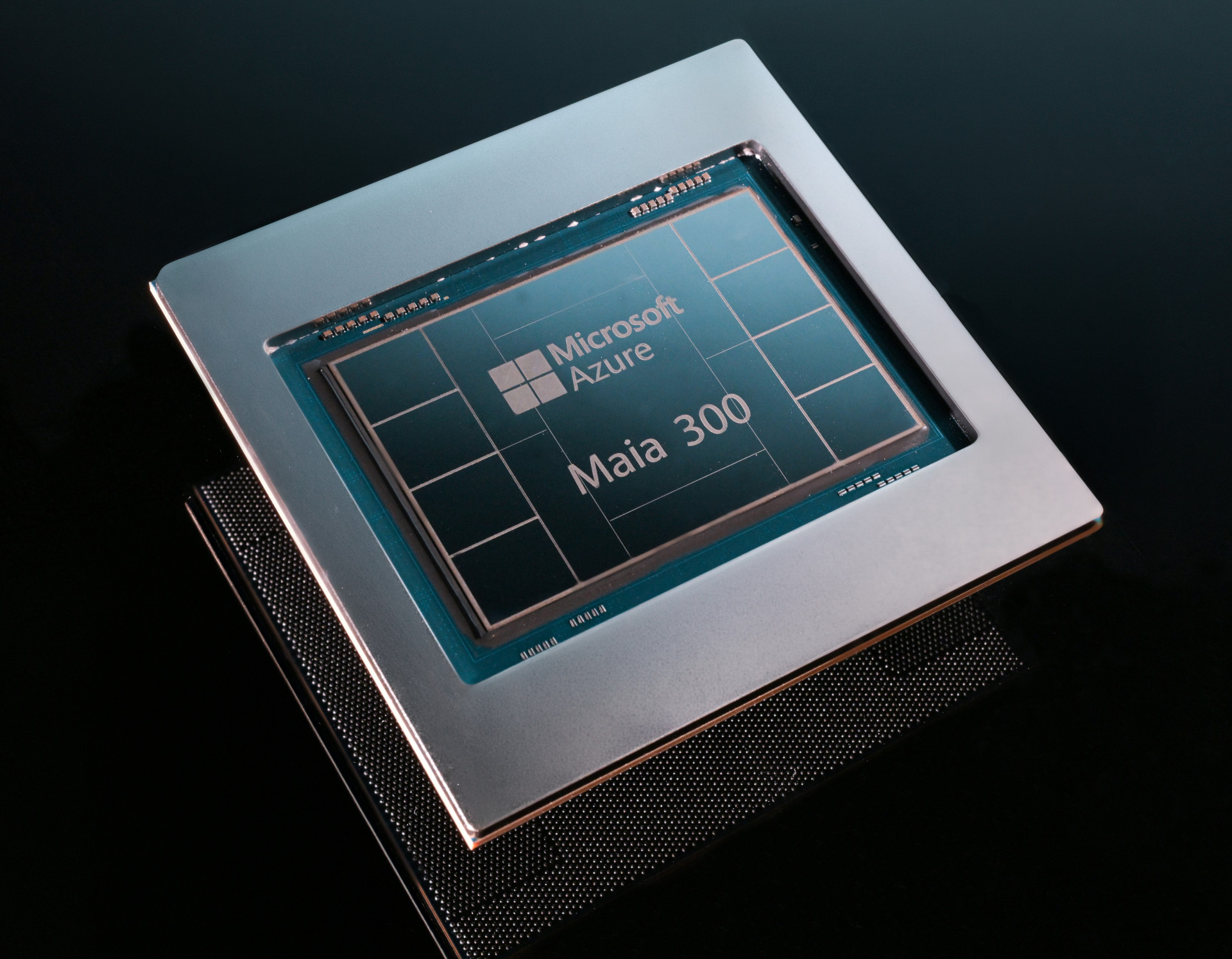
Microsoft has detailed the architecture for its custom Maia 300 accelerator, setting plans to scale in-house silicon to multi-gigawatt deployments starting in 2027 as cloud providers increasingly seek to reduce AI inference costs.
AMD has unveiled Helion, an open rack blueprint optimized for executing AI agents rather than training models, offering configurations with up to 32,768 CPU cores to address data center power constraints.
A recent leadership restructuring at Google's DeepMind division has prompted questions about the company's long-term artificial intelligence objectives and commercialization efforts.
The Santa Clara startup is building chiplet and licensing technology designed to move data faster between AI processors, memory and networking systems.
The San Francisco startup is building real-time fluid sensors for computing systems that increasingly depend on liquid rather than air to control heat.
The San Francisco and Tokyo company is developing low-latency speech models for Japanese, Korean and Chinese applications.
Two former Anthropic and Google researchers launched the company at a $1 billion valuation with backing from Andreessen Horowitz, Kleiner Perkins and Nvidia.
The new workflow creates a short-lived Cloudflare environment that can be claimed or allowed to expire.
New developer primitives address memory, subagents, execution and recoverable long-running work.
The financing gives the San Francisco AI company an extraordinary capital base, while placing equal pressure on revenue growth, infrastructure execution and product focus.
The Santa Clara company reached a $4.2 billion valuation as large AI systems create demand for faster, more flexible connections between processors.