Zscaler CEO Jay Chaudhry Points to AI Security Acceleration and Zero-Trust Growth
Zscaler CEO Jay Chaudhry outlined expanding AI security offerings and acceleration in zero-trust deployments as the cloud cybersecurity firm heads into fiscal 2027.
Archive
Zscaler CEO Jay Chaudhry outlined expanding AI security offerings and acceleration in zero-trust deployments as the cloud cybersecurity firm heads into fiscal 2027.
As enterprise organizations shift toward continuous AI output models, tech giants like Dell and Intel are embedding security controls directly into silicon, networking, and agent governance frameworks to manage new threat vectors.
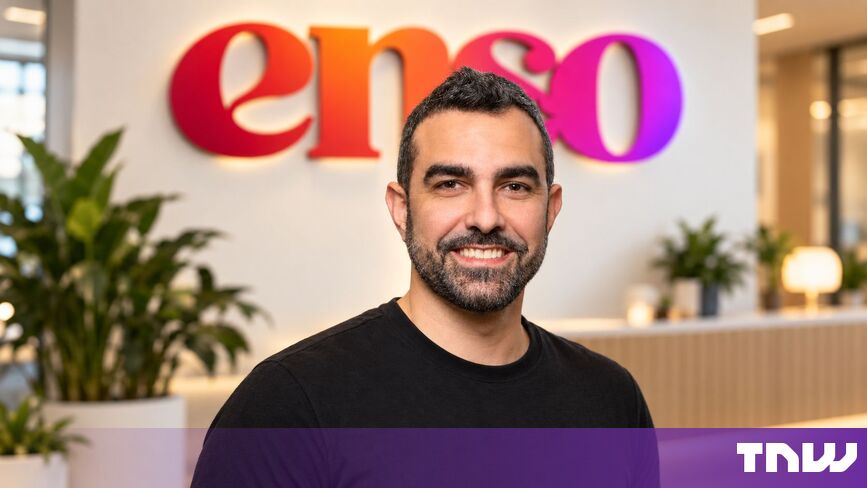
Growth research firm enso has raised $25 million following an initial $6 million seed round, establishing an experimental AI agent lab aimed at enterprise go-to-market execution.
Despite a nearly 40% stock decline since 2026, NuScale Power maintains a $12 Wall Street consensus target as management works to formalize a massive 6-gigawatt agreement with the Tennessee Valley Authority.
The Palo Alto startup is expanding tools for creators and enterprises while facing the harder task of preventing unauthorized voice cloning.
The Tel Aviv and San Francisco startup wants one continuously updated graph for employees, software accounts, service identities and AI agents.
The company behind a widely used local AI tool is adding resources for enterprise adoption while keeping its open-source distribution engine.
Accel led the Series A for a company automating the pay applications, lien waivers and job-cost work that still runs on paper and email.
The AI testing company is moving beyond fixed benchmarks with models that generate changing environments for training and evaluation.
The San Francisco and Tokyo company is developing low-latency speech models for Japanese, Korean and Chinese applications.
The Stanford-founded startup plans to ship a wellness wristband that infers hormone patterns without blood draws while it pursues clinical validation.
The San Francisco startup is investing in its own speech models and the infrastructure required to run large volumes of automated business calls.
The San Francisco startup is trying to replace disconnected sales tools with a system that carries context from prospecting through a closed deal.
The finance software startup is expanding AI agents that handle invoicing, reconciliation, collections and other repetitive cash workflows.
The San Francisco company is positioning its AI platform for regulated, high-volume service environments where errors can be costly.
The company is assembling distributed GPU capacity into a platform that lets developers choose models, hardware and deployment locations.
The San Francisco company pairs software agents with growth specialists as brands adjust to search results shaped by traditional engines and AI answers.
The Y Combinator startup is making its streaming platform generally available as AI developers look for simpler ways to process live data.
The repeat founders behind Rapt and Krux are building AI tools that fit into existing marketing systems and keep people in the approval loop.
The voice platform is expanding through software and telecom partners that can distribute automated front-desk service at scale.
The company is applying foundation-model techniques to tables and relational data, an area where text-focused AI systems often struggle.