AI-Powered Voice Dictation Tools Enhance Productivity for Coders and Writers
Advanced AI tools for voice dictation are transforming how professionals, including software developers and writers, interact with their computers, offering increased speed and accessibility.
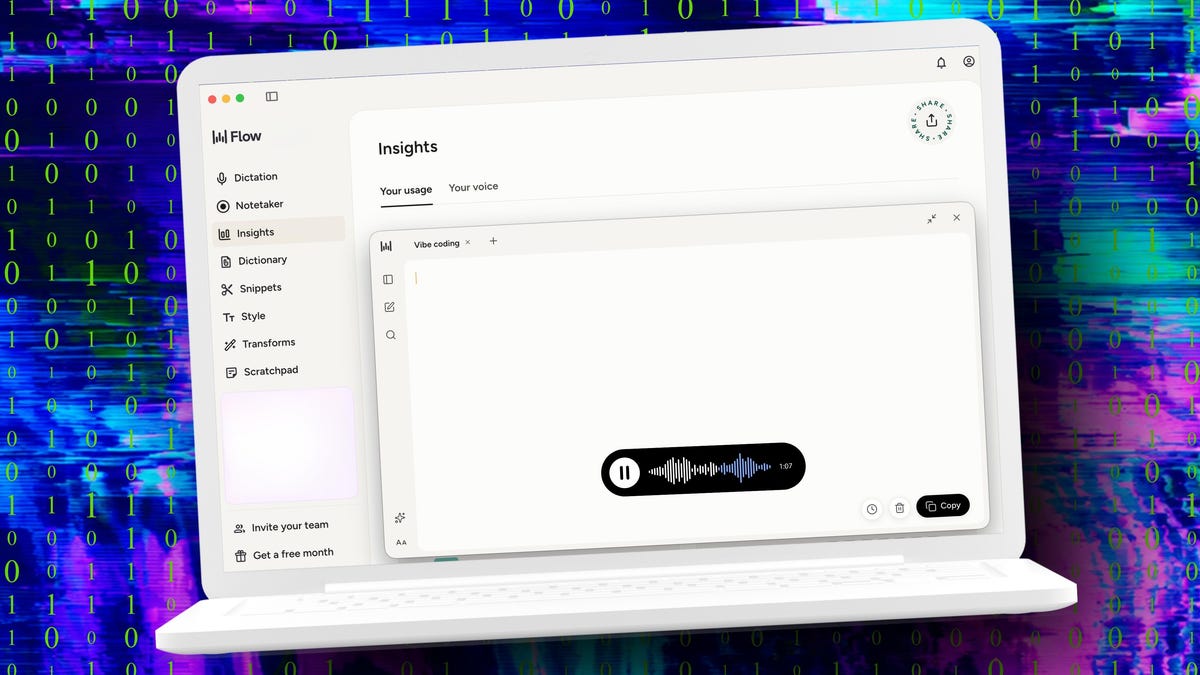
The landscape of computer interaction is being reshaped by advancements in artificial intelligence, particularly in voice dictation. These tools are proving instrumental for individuals seeking to enhance productivity and reduce physical strain associated with traditional input methods. One user, who has dictated over 120,000 words since February 2026, highlights how AI dictation has become a primary input modality, helping to mitigate carpal tunnel symptoms and accelerate workflow. This individual's usage extends to coding with tools like Claude Code and OpenAI’s Codex, communicating in platforms such as Slack and Google Chat, and managing emails and notes.
The adoption of voice dictation is driven by its efficiency, with dictation speeds averaging 118 words per minute, significantly faster than typical typing speeds of 70 to 80 words per minute. While dictation may sometimes lack the precision of typing for highly structured content, it excels in dynamic scenarios such as 'vibe coding'—the process of verbally outlining feature requirements, behavior, or bug observations. This method offers both speed and ergonomic benefits, reducing stress on hands and wrists.
Critical features for effective voice dictation tools include customizable dictionaries and on-the-fly correction capabilities. A customizable dictionary ensures that specific terminology, such as proper nouns or technical jargon, is accurately transcribed. The ability to correct dictation in real-time, often initiated via a hotkey, ensures that the final text is accurate and complete, even if initial verbalizations contain errors or self-corrections. This functionality allows users to maintain a continuous flow of thought without interruption.
Among the top contenders in AI dictation tools are Wispr Flow, Superwhisper, and FluidVoice. Wispr Flow, priced at $144 annually or $15 monthly, is noted for its cross-platform availability on Mac, Windows, iOS, and Android, with Linux support pending. Its standout feature is its 'in-flight self-correction,' which allows users to verbally correct errors as they speak, leading to more accurate and usable text. This capability is significantly more robust in Wispr Flow compared to competitors like FluidVoice, which demonstrated less consistent correction accuracy.
Wispr Flow also boasts a highly reliable dictionary system. Once trained on specific words or common misinterpretations, it consistently transcribes them correctly. For instance, after being taught to recognize 'ZDNET' and to convert 'call it code' to 'Claude Code,' Wispr Flow maintains accuracy almost flawlessly. Although it occasionally fails to insert text directly into the intended application, a dictation history feature within the app allows users to easily retrieve and paste any missed content, ensuring no data is lost.
A notable consideration for Wispr Flow is its cloud-only operational model, which means all voice data is processed remotely. The company does not disclose the specific AI model underpinning Wispr Flow, though it is not based on OpenAI’s open-source Whisper technology. This cloud dependency raises questions regarding data privacy and security for some users. In contrast, Superwhisper offers an on-device processing option, enhancing privacy by keeping data local and eliminating the need for an internet connection, though this comes with a monthly cost of $10 for unlimited usage.
Superwhisper's key advantages include its on-device processing, which guarantees data privacy and allows for offline functionality. It offers accurate transcription, particularly for highly technical terms, and supports multiple languages. However, its dictionary features are more limited, lacking the sophisticated 'replace this with that' functionality of Wispr Flow, and its in-flight correction mechanism is not as seamless. FluidVoice, while offering a free version, provides a more rudimentary dictation experience, with fewer advanced features and less consistent accuracy in corrections and dictionary usage. Each tool presents a unique balance of features, cost, and privacy considerations, catering to different user needs within the evolving landscape of AI-powered voice dictation.
Sources
Written by
The Company Wire
Inside the companies building what’s next. Reporting on startups, technology, funding and the people shaping them.