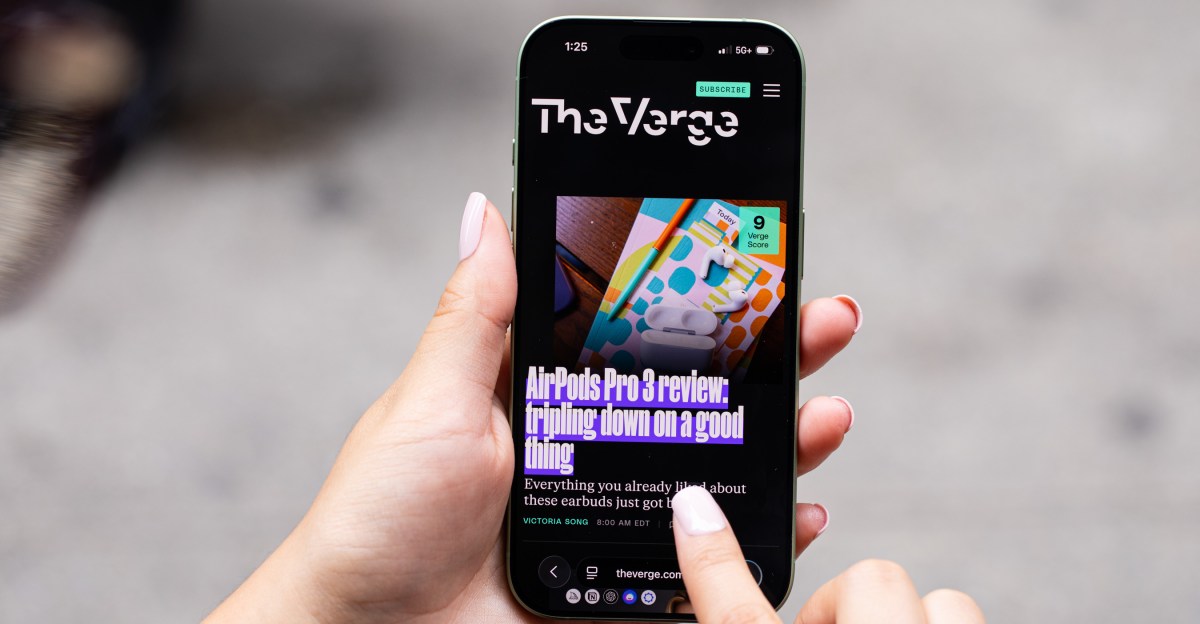
Apple Launches iPhone 18 Pro With 2nm A20 Pro Silicon and In-House C2 Modem
The flagship update pairs a smaller Dynamic Island and variable aperture with redesigned passive thermal hardware to sustain higher workloads.
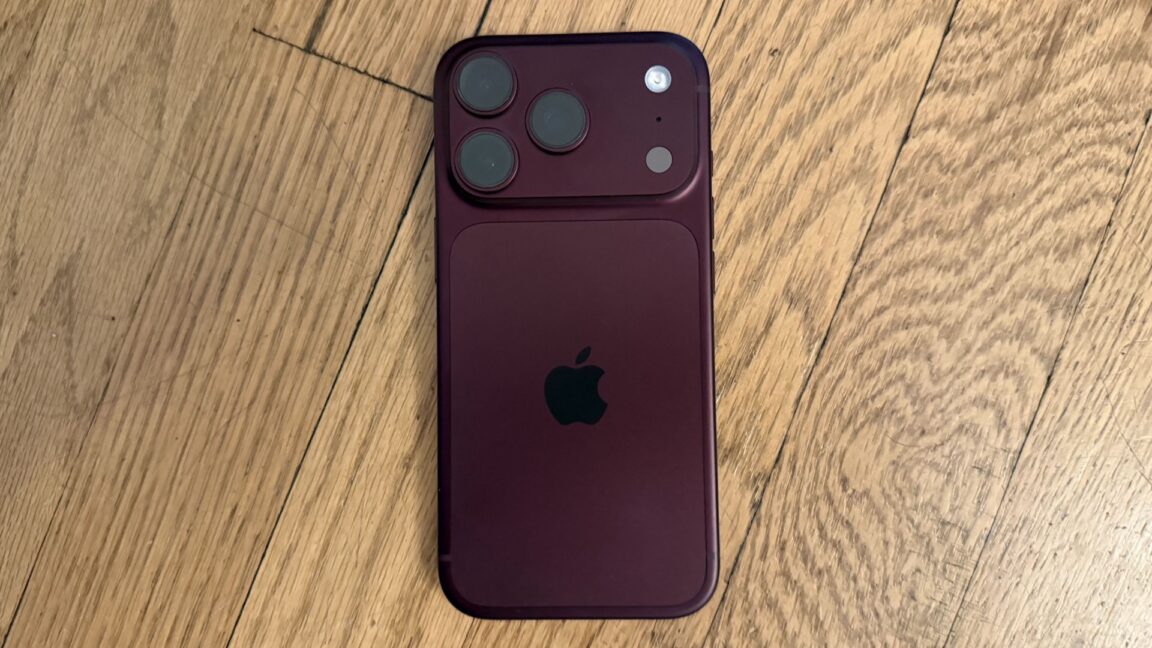
Apple has released the iPhone 18 Pro, introducing a transition to 2-nanometer chip fabrication, custom in-house cellular silicon, and an overhauled internal thermal architecture, according to a review published by Ars Technica . Arriving as Chief Executive Officer Tim Cook's tenure draws to a close, the flagship handset prioritizes sustained performance and power efficiency over radical exterior redesigns.
The most noticeable physical change on the front face is a reduced Dynamic Island cutout. Apple shrank the display housing by shifting the infrared camera beneath the active OLED panel in the upper-left corner of the screen. A modified pixel arrangement allows infrared light to penetrate the display layer, while the pixels directly over the sensor run at double standard brightness to compensate for lower pixel density. In iOS 27, the smaller cutout enables the interface to present up to three live activities simultaneously, showing expanded details on the primary central task alongside compact dot indicators on either side.
Internally, the device runs on Apple's new A20 Pro system-on-chip, built on a 2nm manufacturing process compared to the 3nm node used for the A19 Pro. The processor retains a six-core CPU configuration with four efficiency cores and two performance cores. The seven-core GPU adds a dedicated Neural Accelerator to each core to accelerate graphics-based machine learning workloads alongside hardware-accelerated ray tracing, backed by a dual 16-core Neural Engine for on-device AI processing.
Memory and thermal architectures have also been restructured. The A20 Pro delivers 50 percent more memory bandwidth through a wider memory interface. To disperse heat more effectively, Apple relocated the system-on-chip adjacent to the memory module on the board rather than stacking them directly on top of each other. The packaging redesign is paired with a larger internal vapor chamber and a copper heat-dissipation material mounted behind the display plate.
According to Apple, the cooling modifications deliver up to 40 percent better sustained computational performance compared to the iPhone 17 Pro, and up to 100 percent better sustained performance than the iPhone 16 Pro. Ars Technica reported that in practical use, the improved heat dissipation prevented thermal throttling during intensive benchmarks and gaming, while keeping the chassis cooler during everyday tasks such as streaming and navigation.
Power efficiency has improved across both battery life and connectivity. Apple rates the iPhone 18 Pro for up to 36 hours of offline video playback, up from 33 hours on the iPhone 17 Pro, while the iPhone 18 Pro Max reaches up to 45 hours. The gains are supported by Apple's proprietary C2 cellular modem, which replaces the Qualcomm modem used in the previous generation and consumes less energy. Wireless charging rates now reach up to 25 watts.
The camera hardware carries over the triple 48-megapixel rear array and 18-megapixel front sensor from the iPhone 17 Pro, while adding a variable aperture to the primary rear lens that adjusts automatically by default or manually via camera settings. The default Camera app also incorporates Photographic Styles 3, introducing four texture presets—film, glow, soft skin, and standard—alongside expanded manual controls designed to give photographers more direct aesthetic control over computational processing.
Sources
Written by
The Company Wire
Inside the companies building what’s next. Reporting on startups, technology, funding and the people shaping them.