FCC Blocks New Foreign-Made Humanoid Robots, Robot Dogs and Power Inverters
The import restrictions focus largely on Chinese equipment that officials say could enable surveillance, remote control or cyberattacks.
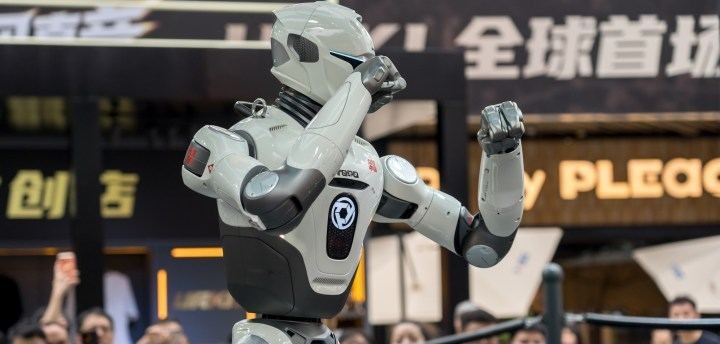
The Federal Communications Commission has added foreign-made humanoid robots, robotic dogs and power inverters to a national-security restriction list. The action prevents approval of new covered devices unless the U.S. government determines that a specific product does not create an unacceptable risk.
The policy is aimed primarily at China, which leads global production of humanoid robots and supplies a substantial share of power electronics. Officials argue that connected devices could be used for surveillance, remotely manipulated or incorporated into broader cyber operations.
Existing equipment is not affected. That is especially important for power inverters already installed in homes and renewable-energy systems, where the devices connect solar panels or batteries to the electrical grid. The market for humanoid robots remains small, with about 15,000 units shipped globally in 2025.
The restriction follows earlier U.S. actions involving communications routers, surveillance cameras and TikTok. China rejected the decision and said it would defend its companies. The FCC says exceptions remain available when a manufacturer can demonstrate that a product does not pose a security threat.
U.S. companies may benefit if the ban creates room for domestic robotics and inverter production, but capacity will take time to build. Government procurement and research support can strengthen alternatives more effectively than a restriction alone. Without a supply strategy, customers may face higher prices while the underlying dependence simply moves to a different foreign source.
The restriction combines several technologies under a national-security rationale, but the risk and available alternatives differ by product. A networked humanoid may collect audio and video inside a facility, while a solar inverter can influence energy operations at enormous scale. Agencies should publish technical standards that distinguish removable software risk from supply-chain ownership. Importers and customers need a transition period, inventories of affected equipment and guidance on updates for devices already installed. A ban without testing and replacement capacity can increase costs without proving that the remaining systems are secure.
A categorical ban may reduce exposure, but it can also raise costs and slow deployment of useful technology. The government should publish technical criteria for exceptions and evaluate risks through software access, data flows, update mechanisms and ownership rather than nationality alone. Clear standards would make the policy more defensible and give manufacturers a path to prove that equipment can operate safely.
Sources
Written by
The Company Wire
Inside the companies building what’s next. Reporting on startups, technology, funding and the people shaping them.