European Venture-Backed Tech Could Surpass Industrial Base by 2031, Dealroom CEO Says
At Turin's Wave by Vento, Yoram Wijngaarde argued Europe's first trillion-dollar startup may already exist, but warned structural capital deficits still send late-stage gains abroad.
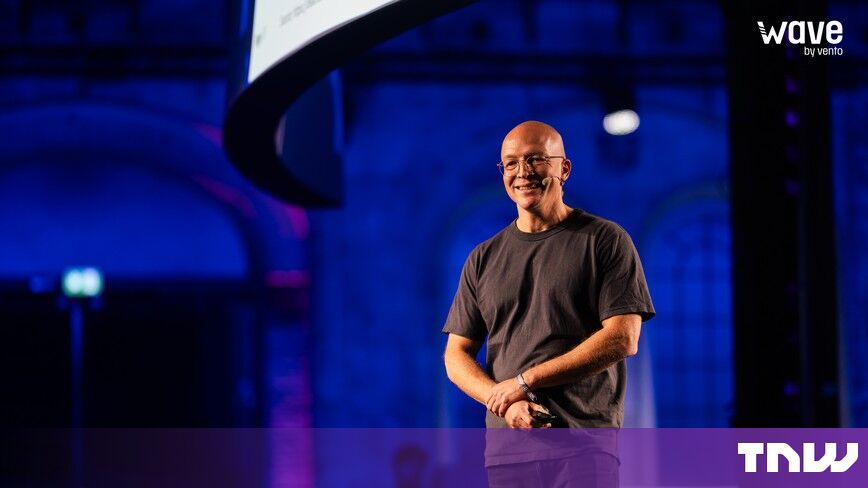
Europe's venture-backed technology sector could generate more value than the continent's traditional industrial base within five years, Dealroom founder and chief executive Yoram Wijngaarde said at the Wave by Vento conference in Turin. As reported by The Next Web (https://thenextweb.com/news/dealroom-yoram-wijngaarde-european-tech-trillion-dollar-startup-wave-by-vento), Wijngaarde argued that Europe's first trillion-dollar tech company may already exist as an early-stage startup, provided the region builds the capital and market conditions to support it.
Speaking alongside Atomico partner and head of insights Tom Wehmeier, Wijngaarde presented Dealroom data showing European venture investment running at an annualized rate of $89 billion. The total valuation of Europe's venture-backed companies has reached $4.4 trillion—roughly one-quarter the value of European public equity markets—anchored by 56 firms valued above $10 billion. Exit volume this year has exceeded prior years combined, buoyed by transactions such as Milan-based Bending Spoons raising $1.68 billion in its U.S. listing in July. Recent large rounds include AI lab Mistral's €3 billion financing in September.
Despite those gains, significant structural gaps remain between European and American capital pipelines. Dealroom tracked 54,771 European startups that have raised at least $100,000, compared with 79,432 in the United States. That divide steepens down the funnel: Europe has 1,233 companies that have raised $100 million or more, versus 5,115 in the U.S. While the U.S. counts seven companies valued at over $1 trillion, Europe has none, with only four exceeding $100 billion: Spotify, Arm, Booking.com, and Revolut. Wijngaarde noted that European startups convert into unicorns at the same rate per dollar raised as U.S. peers, indicating efficiency despite a fourfold deficit in $100 million-plus mega-rounds.
Because European institutional capital remains risk-averse, U.S. funds including Sequoia, General Catalyst, and Accel have stepped in, nearly doubling their investments in European startups year on year. Consequently, non-European investors own the majority of late-stage equity in Europe's leading startups, routing long-term investment returns offshore. Wehmeier noted that while European pension funds and insurers manage €15 trillion, they have allocated only €15.5 billion to venture capital over the last decade. In contrast, European capital deployed approximately $50 billion into corporate bonds issued by U.S. cloud hyperscalers this year alone. Wijngaarde estimated that shifting just 1% of European pension assets into venture capital would expand available scale-up funding by 50%.
The infrastructure divide is especially acute in artificial intelligence. Nathan Benaich and Air Street Capital's State of AI Report 2026 projected that four U.S. hyperscalers will spend roughly $733 billion in capital expenditures this year. By comparison, the European Union's initial commitment to AI gigafactories is €1 billion, part of a proposal seeking up to €10 billion in public funding and €20 billion in private capital. The report emphasized that hosting data centers locally does not grant Europe ownership or sovereign control of the foundational models running inside them.
Regulatory fragmentation and corporate restructuring barriers further dampen growth. Countries with high corporate restructuring costs, including France, Italy, and Spain, produce fewer unicorns per capita than low-friction environments such as Denmark and the U.S. About 42% of European unicorn founders established their companies in the United States. To counter this drain, Wijngaarde endorsed the creation of a unified European capital market—a reform advocated by Mario Draghi and Enrico Letta—and supported the 'EU Inc' standardized corporate framework. Wehmeier also urged governments to open Europe's €2 trillion annual public procurement budget to technology startups across space, energy, and compute, following the initial precedent set by defense tech contracts with companies like Helsing and Quantum Systems.
Sources
Written by
The Company Wire
Inside the companies building what’s next. Reporting on startups, technology, funding and the people shaping them.