SoftBank Reports Q1 Profit Exceeding Expectations, Driven by Intel Gain
SoftBank's first fiscal quarter saw profits surpass market predictions, primarily due to a significant increase in its Intel investment, while its Vision Fund benefited from ByteDance's rising valuation.
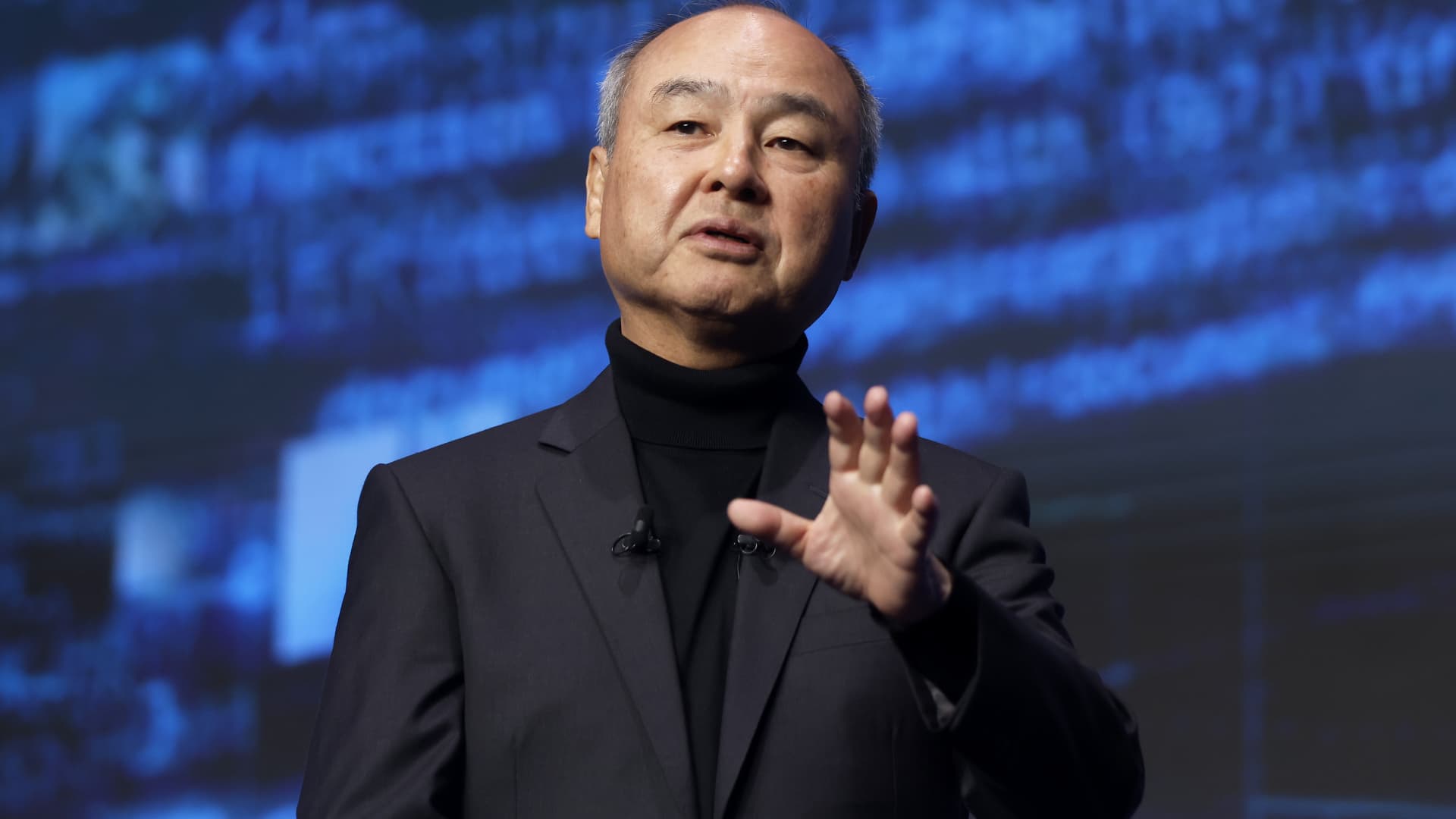
SoftBank announced its fiscal first-quarter earnings, revealing a net profit of 347.3 billion Japanese yen ($2.2 billion) for the period ending in June. This figure surpassed analyst expectations of 120.23 billion yen, according to LSEG estimates. However, the reported profit represented an approximately 18% decrease compared to the same quarter of the previous year.
A substantial gain of 1.3 trillion yen from SoftBank's holdings in the U.S. chipmaker Intel was a primary driver of the positive results. SoftBank had made an investment of roughly $2 billion in Intel during the prior year. This appreciation led SoftBank's investment division, which operates independently from its Vision Funds, to record a segment profit of 1.05 trillion yen. Intel's stock has seen a nearly 400% surge over the past 12 months.
The SoftBank Vision Funds, which encompass investments in companies ranging from OpenAI to TikTok's parent company ByteDance, experienced a collective gain of $1.7 billion in value during the first quarter. This increase was predominantly fueled by a $2.2 billion rise in the valuation of SoftBank's stake in the Chinese company ByteDance, which counterbalanced declines observed in other portfolio companies such as PayPay. Despite this, the Vision Funds segment posted a profit of 5.4 billion yen, a significant decrease from the 451.4 billion yen reported a year ago.
Notably, SoftBank recorded no gain or loss from its investment in OpenAI during this quarter. This contrasts with the previous quarter, when the Vision Funds reported a nearly $20 billion gain, almost entirely attributable to OpenAI. SoftBank had committed to investing over $60 billion in OpenAI, which would grant it roughly 13% ownership, as announced in February, with $55 billion already invested. However, the company indicated no investment gain or loss for OpenAI in its recent reporting.
OpenAI faces increasing competition from entities like Anthropic, U.S. hyperscale providers including Amazon, and various Chinese open-source developers. Concurrently, businesses are scrutinizing their expenditures on artificial intelligence initiatives. SoftBank maintains the ability to adjust valuations of private companies within its portfolio if significant changes in their operational landscape are identified. However, according to an individual familiar with the matter, SoftBank has not identified new information justifying a revaluation of OpenAI.
The emergence of more participants in the AI sector is viewed by SoftBank as an indicator of the market's expansion, with the competitive environment not raising significant concerns for the Vision Fund team. OpenAI confidentially filed for an initial public offering in June. A source indicated that SoftBank would likely divest a portion, though not a substantial one, of its OpenAI holdings once the company goes public.
SoftBank has strategically positioned itself to capitalize on the artificial intelligence boom through investments in companies such as OpenAI and semiconductor firms like Arm. Nevertheless, investors are closely examining AI spending by technology companies, seeking demonstrable returns on these investments. SoftBank's share price has decreased by approximately 34% from its peak in June, as investor apprehension grows regarding its ongoing funding strategies and the portfolio's significant concentration in Arm and OpenAI.
The company's AI computing segment reported a loss of 200.8 billion yen, a wider deficit than the 32.4 billion yen loss recorded in the prior year's comparable quarter. This segment includes chip companies such as Arm, Graphcore, and Ampere. SoftBank attributed the deteriorating profit to increased research and development costs within these companies.
In June, SoftBank CEO Masayoshi Son communicated to CNBC that he does not perceive the company as overly exposed to OpenAI, which constitutes about 20% of the Japanese conglomerate's net asset value. Son characterized the AI revolution as 50 times greater in scale than the dot-com era, stating, "This is the biggest revolution of technology and realization that mankind ever experienced, so this is just like the beginning of the internet."
Sources
Written by
The Company Wire
Inside the companies building what’s next. Reporting on startups, technology, funding and the people shaping them.