Microsoft Debuts Surface Laptop Ultra Powered by Nvidia's Arm-Based RTX Spark Chip
Starting at $2,599, the flagship Windows notebook targets Apple's MacBook Pro with unified memory and local 280B-parameter AI compute.

Microsoft has introduced the Surface Laptop Ultra, a premium notebook built to compete directly with Apple’s MacBook Pro while debuting Nvidia’s new RTX Spark processor family. As detailed in reporting by The Verge , the flagship computer represents Microsoft's effort to reach top-tier portable performance on Windows following its 2024 Copilot Plus PC initiative, which focused on Qualcomm chips targeted at the MacBook Air.
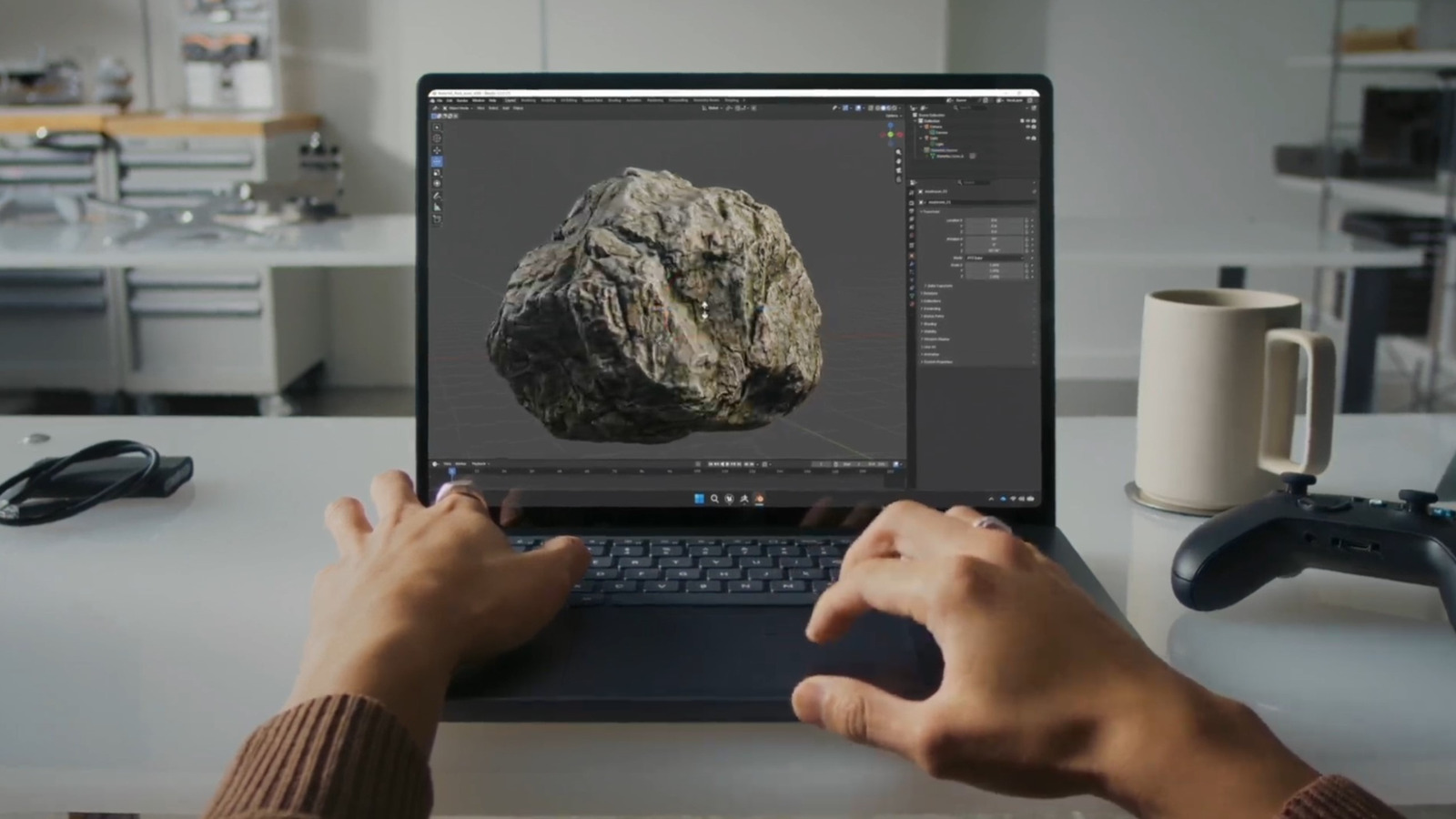
The notebook serves as the initial platform for Nvidia’s RTX Spark, an Arm-based system-on-chip combining a CPU and GPU with unified memory. According to Microsoft, the architecture delivers enough local compute power to run compressed 280-billion-parameter artificial intelligence models entirely on-device without cloud infrastructure. The unified memory design is aimed at handling intensive professional creative workloads in software like Blender, Adobe Photoshop, and Premiere.
Aimed at developers running local AI workloads and creative professionals, the Surface Laptop Ultra starts at $2,599.99 for a base model with 24GB of RAM and reaches $5,899.99 for a top-tier configuration with 128GB of memory. The hardware incorporates a CNC-machined aluminum chassis, elevated base fan vents, an SD card slot, an HDMI port, and a high-resolution touchscreen. The internal layout maximizes battery capacity and prioritizes repairability by avoiding glued components and embedding QR-coded disassembly guides directly on hardware modules.
To accompany the new architecture, Microsoft redesigned its power connector by engineering a magnetic attachment around a standard USB-C port rather than utilizing a proprietary port design. Surface lead designer Jit Hirani stated that the team went through approximately 300 iterations to retain universal USB-C functionality alongside magnetic quick-release capability. The system connects to a 140-watt charging adapter with a reversible cable.
Developing the platform involved deep hardware and software coordination between Microsoft and Nvidia. Brett Ostrum, corporate vice president of Surface at Microsoft, noted that existing chipsets were incapable of matching MacBook Pro-tier performance until Nvidia demonstrated its Arm-based AI processing roadmap. To eliminate weeks of multi-branch software integration lag, Microsoft created an automated testing rig featuring custom robotics that allows Nvidia engineers to deploy code remotely and verify system stability overnight.
The hardware underwent validation inside a windowless testing facility on Microsoft’s Redmond, Washington, campus. The facility houses stress-testing robotics for hinges and drop impacts, radio frequency compliance chambers, electron microscopes, and a dedicated failure analysis laboratory. In previous product cycles, the lab used nanometer-scale microscopy to isolate touchscreen touch failures caused by halogen contaminants introduced after a component supplier switched operator gloves.
Beyond retail hardware sales, Microsoft positions the Surface Laptop Ultra as a performance reference for the broader PC ecosystem. Division executives maintain that Surface hardware exists to establish capability benchmarks for third-party original equipment manufacturers, driving industry improvements across trackpads, displays, and structural design while ensuring Windows platforms remain competitive against Apple's custom silicon.
Sources
Written by
The Company Wire
Inside the companies building what’s next. Reporting on startups, technology, funding and the people shaping them.