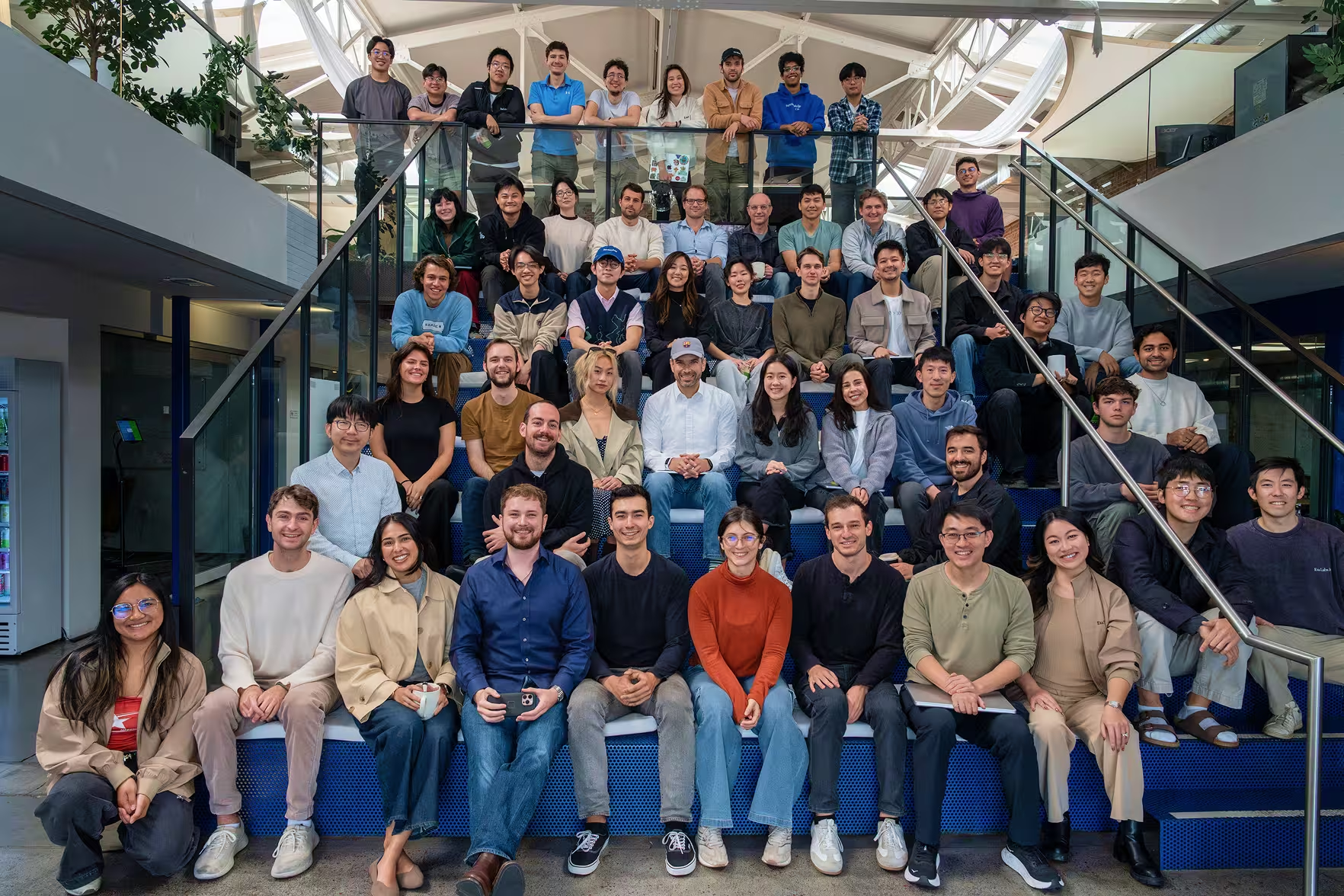
ChipAgents Adds $60 Million as AI Moves Deeper Into Semiconductor Design
The Silicon Valley startup says autonomous software agents can shorten expensive chip-development cycles, with verification emerging as an early target.
Archive
The Silicon Valley startup says autonomous software agents can shorten expensive chip-development cycles, with verification emerging as an early target.
The San Francisco company is expanding autonomous teams that handle procurement, supplier coordination, invoices and payments for large enterprises.
The platform analyzes calls, messages and CRM outcomes to turn effective human techniques into reusable sales and support playbooks.
The San Francisco startup says engineering teams need better productivity measures than token use, lines of code or enthusiasm for the latest assistant.
Insight Partners is backing infrastructure that identifies the proxy networks and VPN services hiding automated users.
The Palo Alto and Tel Aviv company reached a $1.2 billion valuation with a prevention-focused approach to securing devices used for AI work.
The enterprise software startup is expanding an AI-native development platform built around requirements, oversight and audit trails.
The AI testing company is moving beyond fixed benchmarks with models that generate changing environments for training and evaluation.
The startup is creating its own crawler, index and retrieval models for software that asks longer questions and consumes structured results.
The company is building software that continually personalizes campaigns, tests changes and adjusts marketing decisions across customer channels.
The startup wants agents to own recurring business outcomes across existing applications instead of stopping after a single generated response.
The San Francisco startup is investing in its own speech models and the infrastructure required to run large volumes of automated business calls.
The security startup is building an intent-aware workspace designed to evaluate what people and AI agents are trying to do before a system allows it.
The startup is building validation software that checks model responses before errors reach users in high-precision workflows.
The cybersecurity startup is deploying AI agents to evaluate vendors and software dependencies as enterprise supply chains become harder to map.
The San Francisco and Tel Aviv company wants security agents to find and help fix software risks throughout the development lifecycle.
The open-source database platform is financing faster growth as AI agents generate more applications and infrastructure demand.
The Claude developer secured one of the largest private financings ever as demand for enterprise AI and computing capacity continues to climb.
The maker of Devin says enterprise usage is climbing as software teams give cloud agents a larger share of development work.
The San Francisco startup reached a $2.2 billion valuation by selling web search and content retrieval directly to software developers.
The San Francisco startup wants to turn logs, tool calls and user interactions into a continuous feedback system for agent developers.
The San Francisco startup is trying to replace disconnected sales tools with a system that carries context from prospecting through a closed deal.
The finance software startup is expanding AI agents that handle invoicing, reconciliation, collections and other repetitive cash workflows.
The San Francisco startup wants to organize fragmented research and manufacturing data across semiconductors, batteries and advanced materials.
The six-person startup is training AI to learn digital tasks from video, with efficiency and safety becoming the key tests for its approach.
The San Francisco company more than doubled its valuation to $2.75 billion as it expanded from moving customer data to helping agents run campaigns.
The startup is training a foundation model called Fury to control unmanned vehicles across changing military environments.
The new research lab wants software agents to build specialized expertise from experience instead of remaining fixed after training.
The analytics startup is using strategic capital to expand software that lets employees ask questions across fragmented company data in ordinary language.
The a16z-backed startup wants consumer businesses to move from dashboards and recommendations to actions tied to measurable financial results.
Former Atlassian CTO Sri Viswanath is building a control layer for companies that want autonomous agents without giving up security, governance or oversight.
The startup combines AI agents with human media experts to turn sales conversations and customer data into targeted campaigns.
The startup wants employees to direct business software through natural language while agents work across data and applications.
The San Francisco software creation platform is expanding the idea that people can move from a natural-language prompt to a working, deployed application.
The startup formerly known as mcp-use is turning an open-source toolkit into a managed platform for deploying the connectors used by AI applications.
The Y Combinator company is targeting evidence collection and compliance work that still depends heavily on spreadsheets, tickets and manual review.
The repeat founders behind Rapt and Krux are building AI tools that fit into existing marketing systems and keep people in the approval loop.
The Series C extension values the developer platform at $1.5 billion as more teams need persistent infrastructure for applications and agents.
The startup is building authorization and payment tools that let AI agents purchase APIs, data and computing services under defined controls.

.jpg)