Musk Says Tesla Robotaxis Still Struggle to Spot Low-Contrast Animals at Night
Elon Musk acknowledged vision limits as Austin operating hours shift and European regulators prepare to vote on Tesla's camera-only driver assistance suite.
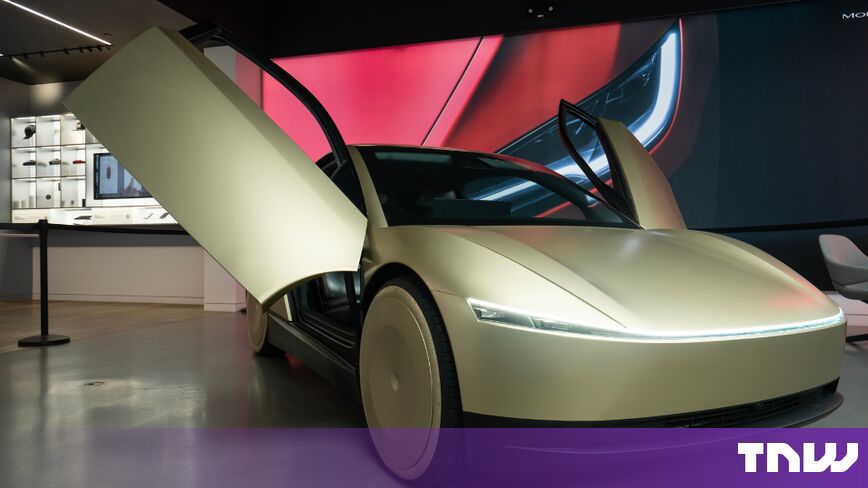
Tesla chief executive Elon Musk acknowledged that the company's autonomous robotaxis continue to struggle with identifying dark animals on roads at night, pointing to an ongoing limitation in the automaker's camera-only autonomous system. Musk said on Friday that Tesla's main technical challenge is avoiding pets that are hard to see at night, describing the issue as "literally trying to avoid grey kittens on grey tarmac in the dark," in remarks first reported by Electrek and covered by The Next Web (https://thenextweb.com/news/tesla-robotaxi-night-pets-eu-vote).
The disclosure coincides with a minor extension of Tesla's autonomous test operations in Austin, Texas. The service's closing time moved from 10:00 p.m. to 11:00 p.m. However, the operating window remains narrower than at its June 2025 launch, when vehicles operated from 6:00 a.m. to midnight. Independent tracking by The Next Web in August recorded Austin cars operating without safety drivers in a fleet that had contracted to approximately 17 vehicles.
Nighttime detection highlights the broader industry divide over autonomous sensor architectures. Optical cameras rely on light and visual contrast to differentiate objects from the road surface, whereas lidar and radar do not. Competitors like Alphabet's Waymo equip their sixth-generation vehicles with 13 cameras, four lidars, and six radars to operate roughly 4,000 driverless cars around the clock. In contrast, Tesla dropped radar in 2021 and ultrasonic sensors in 2022, and has never equipped vehicles with lidar.
Musk has consistently rejected active sensors, labeling lidar a "fool's errand" in 2019, a "seductive local maximum" in 2022, and claiming last August that combining radar and lidar with vision degrades safety through sensor contention. State-level pushback has begun to emerge in the United States, including a New Jersey bill that would require autonomous vehicles to carry two sensing modalities beyond cameras. Scrutiny has also focused on two fatal nighttime crashes in the U.S. last October, in which Model 3 sedans stopped dead in traffic lanes around 9:25 p.m. and shortly after 3:00 a.m. before being struck from behind. Tesla redacted software versions and crash logs as confidential business information, leaving it unverified which system was engaged.
The technical limits surface as European authorities prepare a key regulatory decision. On Oct. 6, the European Union's Technical Committee on Motor Vehicles will vote on bloc-wide approval for Tesla's Full Self-Driving (FSD) Supervised. Passing requires support from 55 percent of member states representing 65 percent of the EU population. While six countries have recognized Dutch approval granted in April after 18 months and 1.6 million kilometers of testing, researchers previously characterized Tesla's regulatory safety submissions in Sweden and the Netherlands as misleading. Although FSD Supervised is a Level 2 system that keeps legal liability with the driver, it relies on the identical camera hardware used in Tesla's driverless Austin tests.
Sources
Written by
The Company Wire
Inside the companies building what’s next. Reporting on startups, technology, funding and the people shaping them.