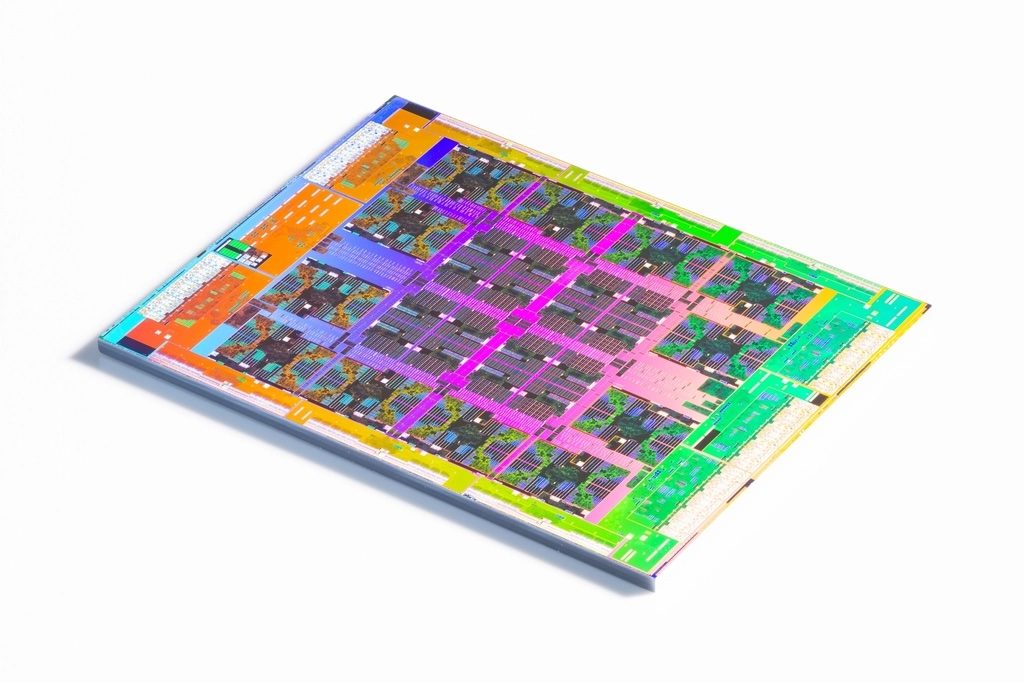
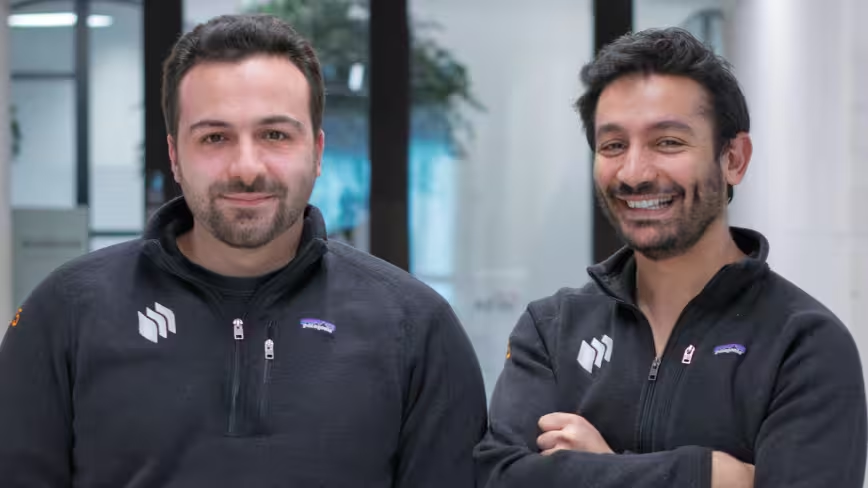
ChipAgents Adds $60 Million as AI Moves Deeper Into Semiconductor Design
The Silicon Valley startup says autonomous software agents can shorten expensive chip-development cycles, with verification emerging as an early target.
Archive
The Silicon Valley startup says autonomous software agents can shorten expensive chip-development cycles, with verification emerging as an early target.
The Palo Alto startup is expanding tools for creators and enterprises while facing the harder task of preventing unauthorized voice cloning.
The San Francisco startup turns television, radio, podcasts and livestreams into searchable signals for companies that need faster narrative tracking.
The startup founded by former Ultrahuman hardware executive Apoorv Shankar is developing physical controls intended to direct AI agents.
The Tel Aviv and San Francisco startup wants one continuously updated graph for employees, software accounts, service identities and AI agents.
The startup is adding automation to a data layer that connects the accounting, project and payment systems used by contractors.
The Palo Alto company is developing robotic locations that dispense prescriptions with remote pharmacist oversight and round-the-clock access.
The enterprise software startup is expanding an AI-native development platform built around requirements, oversight and audit trails.
The robotics startup introduced its first commercial hand and closed a seed round after settling a trade-secret dispute with Tesla.
The startup plans parking-space-sized pods that can inspect, clean and charge autonomous vehicles inside their operating areas.
The San Francisco and Tokyo company is developing low-latency speech models for Japanese, Korean and Chinese applications.
The startup is creating its own crawler, index and retrieval models for software that asks longer questions and consumes structured results.
Two former Anthropic and Google researchers launched the company at a $1 billion valuation with backing from Andreessen Horowitz, Kleiner Perkins and Nvidia.
The Palo Alto startup is using AI to help companies define specialized processors before the expensive physical design and manufacturing stages.
The Stanford-founded startup plans to ship a wellness wristband that infers hormone patterns without blood draws while it pursues clinical validation.
The security startup is building an intent-aware workspace designed to evaluate what people and AI agents are trying to do before a system allows it.
The startup is building validation software that checks model responses before errors reach users in high-precision workflows.
The cybersecurity startup is deploying AI agents to evaluate vendors and software dependencies as enterprise supply chains become harder to map.
The prompt-to-app startup says its community creates games, quizzes and interactive experiments at a rate of about one every half-second.
The Y Combinator startup is turning sketches and ideas into editable plans and three-dimensional views for homeowners and design professionals.
The business-banking technology company is growing alongside a new wave of AI startups while pursuing approval for a national bank.
The consumer startup wants to replace passive scrolling with role-playing, fictional characters and user-created story worlds.
The Palo Alto company founded by Rivian CEO RJ Scaringe has now raised more than $1 billion for industrial robots trained in live manufacturing environments.
The San Francisco startup wants to turn logs, tool calls and user interactions into a continuous feedback system for agent developers.
The young San Francisco company is starting with an AI-assisted alternative to the configuration and approval systems used for complex deals.
The Palo Alto startup is commercializing infrastructure around a widely used open-source engine for running and serving advanced AI models.
The San Francisco startup wants to organize fragmented research and manufacturing data across semiconductors, batteries and advanced materials.
The startup wants hardware makers to connect glasses, jewelry and home devices to models and multimodal services without building the entire stack.
The startup is beginning with autonomous road rollers that can be retrofitted onto machines already operating at construction sites.
The new research lab wants software agents to build specialized expertise from experience instead of remaining fixed after training.
The marine robotics company is pairing underwater vehicles with surface vessels and launch systems for commercial and defense missions.
The Santa Clara startup is combining navigation, communications and computing functions in silicon intended for drones and robots.
The Barcelona and San Francisco company is building a governed graph that lets employees, software and agents work from the same organizational knowledge.
The San Mateo startup is teaching software to connect drawings, specifications and other building documents before missing details become costly field problems.
The startup is using conversational agents to conduct structured phone interviews and turn long-form responses into research data.
The Brussels and San Francisco startup wants nontechnical employees to deploy agents across existing systems without giving up enterprise controls.
Former Atlassian CTO Sri Viswanath is building a control layer for companies that want autonomous agents without giving up security, governance or oversight.
The San Jose chip startup is betting that a shorter, vertical path for electricity can remove a growing bottleneck inside high-performance AI systems.
The startup is building an AI memory that reads on-screen text, prepares meeting notes and retrieves information from a user's daily work.
The startup wants employees to direct business software through natural language while agents work across data and applications.
The startup formerly known as mcp-use is turning an open-source toolkit into a managed platform for deploying the connectors used by AI applications.
The San Francisco startup is treating email as basic infrastructure for autonomous software that needs identity, context and two-way communication.
The San Jose startup is developing agentic cybersecurity software meant to connect defenses across corporate networks and operational technology.
The Y Combinator company is targeting evidence collection and compliance work that still depends heavily on spreadsheets, tickets and manual review.
The startup is selling an operated support function rather than software alone, putting automation performance directly on its own team.
The Y Combinator startup is making its streaming platform generally available as AI developers look for simpler ways to process live data.
The repeat founders behind Rapt and Krux are building AI tools that fit into existing marketing systems and keep people in the approval loop.
The Mission Bay startup is building laboratory systems that use living neurons for AI workloads, an ambitious alternative to conventional silicon.
The company is applying foundation-model techniques to tables and relational data, an area where text-focused AI systems often struggle.
The startup is building authorization and payment tools that let AI agents purchase APIs, data and computing services under defined controls.